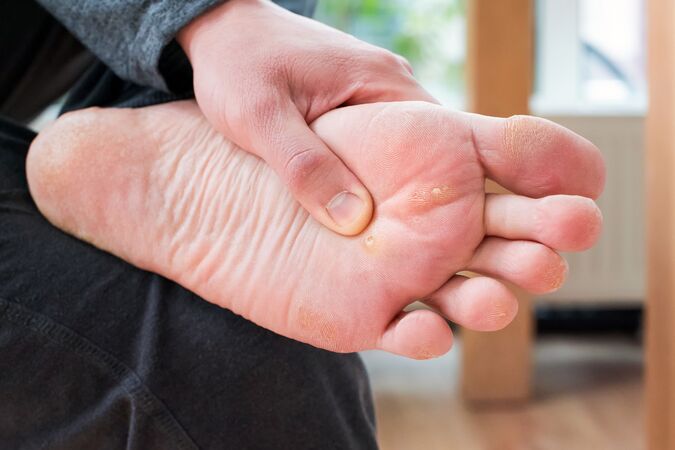
Toe length affects hammertoe pressure by influencing where the toe contacts the shoe and how weight moves across the forefoot. When a longer or poorly aligned toe bends into a hammertoe position, pressure may become concentrated at the toe tip, raised middle joint, or ball of the foot.
Understanding this relationship can help patients recognize why certain corns, calluses, and areas of discomfort repeatedly return. It can also guide decisions about footwear, padding, custom foot orthotics, and other approaches to managing pressure.
What Is a Hammertoe?
A hammertoe is a deformity that most often affects one of the smaller toes. The middle joint bends upward while the end of the toe points downward, creating a hammer-like appearance.
The condition can begin as a flexible deformity, meaning the toe can still be straightened manually. Over time, the joint may become increasingly stiff and eventually remain in a fixed position.
Muscle and tendon imbalances often contribute to the abnormal bend. Foot structure, previous injuries, joint changes, and footwear may also influence how the condition develops.
As the toe changes position, it no longer fits or functions inside the shoe in the same way. The altered contact creates pressure that can irritate the skin and make walking uncomfortable.
Why Does Toe Length Matter?
The second toe is sometimes naturally longer than the big toe. This does not automatically cause a hammertoe, but it may affect how the toe fits inside a shoe and how much force it absorbs.
A longer toe may reach the end of a shoe sooner than the neighboring toes. If the shoe is too short or has a narrow toe box, the toe may be pushed backward and forced to bend. Repeated crowding can aggravate an existing hammertoe and increase pressure at the toe tip or joint.
Toe length also affects leverage during walking. A longer second toe may carry more force as the body moves forward over the foot. When that toe is bent, the pressure may be distributed unevenly across the toe and forefoot.
Where Does Hammertoe Pressure Usually Develop?
Pressure can appear in different locations depending on the toe’s length, flexibility, and position.
The raised middle joint commonly rubs against the upper part of a shoe. This repeated friction can produce redness, irritation, or a corn on top of the toe.
The downward-facing tip may press against the shoe’s insole or ground. Over time, the skin may thicken and form a painful toe-tip callus.
Pressure may also develop beneath the corresponding joint in the ball of the foot. When a toe is not functioning normally, the surrounding forefoot structures may absorb more force during standing and walking.
The location of discomfort can therefore provide useful information. A sore toe tip suggests a different contact pattern than pain beneath the forefoot or a corn on top of the joint.
How Can Shoes Affect a Longer Hammertoe?
Shoe length is only one part of proper fit. Width, depth, upper material, heel height, and internal seams also affect pressure.
A shoe may appear long enough while still lacking adequate vertical space. A raised hammertoe can rub against the top even when the toes do not touch the front of the shoe.
Shoes with tapered toe boxes may push longer toes inward or backward. High heels shift the foot forward, placing additional pressure on the toes and forefoot. Stiff materials and internal seams may further irritate prominent joints.
People with hammertoes generally benefit from shoes with a wide, deep toe box and a soft upper. There should be enough space for the toes to rest without being squeezed, but the shoe should still hold the heel securely.
Can Custom Orthotics Help Manage the Pressure?
Custom orthotics cannot straighten a rigid hammertoe. However, they may help manage contributing forces by supporting the foot and redistributing pressure during standing and walking.
A professional evaluation considers more than toe length. It may include arch structure, joint movement, gait, areas of callus buildup, previous injuries, and the exact location of discomfort.
Patients exploring phoenix custom orthotics may receive a device designed around their individual foot structure rather than a standard insert. Depending on the findings, an orthotic may include accommodations intended to reduce stress beneath a sensitive forefoot area.
The device must also fit correctly inside appropriate footwear. Placing an orthotic in a shallow shoe can reduce available toe space and increase pressure on the raised joint. Shoe and orthotic selection should therefore be considered together.
People searching for orthotics in Phoenix should understand that the purpose of a prescribed device is not simply to add cushioning. Its shape, materials, support, and pressure-relieving features should correspond to the condition being addressed.
What Other Options May Reduce Hammertoe Pressure?
Several conservative measures may help, particularly while the toe remains flexible. Options can include roomier footwear, protective padding, toe sleeves, stretching, and professionally guided exercises.
Corns and calluses may be reduced by a qualified podiatric provider. Removing thickened skin can relieve discomfort, but the buildup may return unless the underlying pressure is also addressed.
Padding should be used carefully. A bulky pad placed inside a tight shoe can occupy valuable space and create additional pressure. Any protective device should fit comfortably without crowding the affected toe.
Patients should not cut corns or calluses themselves. Doing so may damage healthy skin, especially when diabetes, reduced sensation, or circulation problems are present.
When Should Hammertoe Pressure Be Evaluated?
An evaluation is appropriate when discomfort interferes with walking, the toe becomes difficult to straighten, or corns and calluses repeatedly return. Redness, swelling, drainage, bleeding, or an opening in the skin requires timely attention.
People with diabetes or reduced sensation should not rely on pain alone. They may not feel excessive pressure even when the skin is being damaged.
Take the Next Step Toward Better Foot Comfort
A longer toe does not always create a problem, but its position can influence where a hammertoe becomes irritated. If recurring pressure, corns, or shoe discomfort are affecting daily activity, schedule a podiatric evaluation to identify the pressure source and discuss suitable footwear, orthotics, and care options.