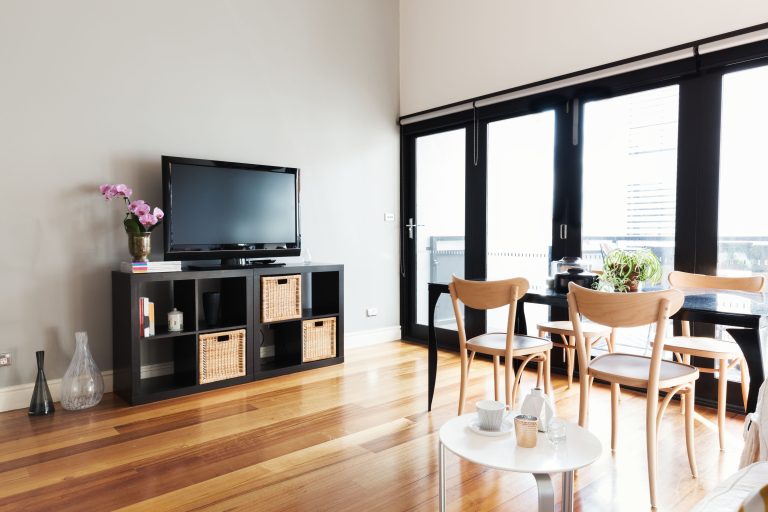
Commercial wood floor refinishing restores worn, dull, or scratched hardwood through sanding, staining, and sealing rather than full replacement.
Projects require careful scheduling, dust control, and finish selection suited to high-traffic commercial environments.
Environmental conditions like humidity and temperature directly affect how long a refinished floor performs.
Commercial wood floor refinishing is the process of sanding down a hardwood surface and applying a new stain and protective finish to restore its appearance without tearing out the existing floor. For businesses managing retail spaces, offices, gyms, or institutional buildings, this approach extends the life of hardwood while avoiding the cost and downtime of a full replacement.
Wood floors in commercial settings absorb far more daily stress than residential floors. Foot traffic, rolling carts, chair movement, and spills accelerate wear on the finish layer long before the wood itself is damaged. Master Care Flooring understands the importance of commercial wood floor refinishing in addressing this surface-level deterioration, restoring shine and protection while preserving the original flooring material underneath.
Business owners often wait too long to address dullness or scuffing, assuming replacement is the only fix. In most cases, the wood structure beneath a worn finish is still sound, and refinishing can restore it to near-original condition at a fraction of the cost of new flooring.
Why Commercial Spaces Need a Different Refinishing Approach
Refinishing a commercial floor is not the same project as refinishing a floor in a private home. Scale, scheduling, and durability requirements all shift the approach.
Larger surface areas mean sanding and finishing must be done in sections to minimize business disruption.
Finish selection often prioritizes abrasion resistance over cosmetic preference, since commercial floors see heavier daily use.
Scheduling around operations is critical, with many projects completed overnight, over weekends, or in phases to avoid closing a business entirely.
Dust and fume control matters more in occupied buildings, especially where employees or the public may be present nearby during the work.
These factors mean commercial refinishing calls for contractors experienced in managing logistics as much as craftsmanship.
What the Refinishing Process Typically Involves
A commercial refinishing project generally follows a consistent sequence, even though timelines vary by square footage and floor condition.
Assessment and consultation to evaluate the floor’s current wear, finish type, and any structural concerns before work begins.
Sanding to remove the old finish layer and surface damage, exposing clean wood underneath.
Staining if a color change or refresh is desired, though many commercial projects simply restore the original tone.
Sealing with a protective finish rated for the expected level of foot and equipment traffic.
Curing time, during which the space typically needs to remain clear of furniture and heavy use.
Environmental control during and after the project also affects outcomes. According to the National Wood Flooring Association installation guidelines, wood flooring performs best when room conditions are kept within a specific temperature and humidity range, which helps prevent issues such as finish failure or board movement after the work is complete.
Comparing Refinishing Options for Commercial Floors
Not every commercial space needs the same finish or approach. The table below outlines common considerations when planning a project.
Consideration
Standard Refinish
Heavy-Duty Commercial Finish
Historic/Specialty Floor
Best for
Offices, retail with moderate traffic
Gyms, lobbies, high-traffic corridors
Landmark or estate buildings with original flooring
Finish priority
Appearance and cost balance
Abrasion and scratch resistance
Preservation of original wood and character
Typical downtime
Low to moderate
Moderate, often phased
Varies, may require specialized scheduling
Key concern
Matching existing tone
Durability under constant use
Protecting historically significant material
Choosing the right category depends on how the space is used daily and whether the flooring itself carries any historical or architectural value worth preserving.
Planning a Project That Minimizes Disruption
Commercial property managers generally care most about one thing during a refinishing project: keeping the business running. A few planning steps help reduce friction.
Schedule work during off-hours, weekends, or planned closures when possible.
Confirm finish cure times in advance so furniture and equipment are not moved back too early.
Ask about dust containment methods, since airborne particles can affect air quality in occupied buildings.
Request a clear timeline broken into phases if the space cannot be fully vacated at once.
Clear communication between the contractor and facility staff before work begins tends to prevent most scheduling surprises later.
Frequently Asked Questions
How often should a commercial wood floor be refinished? This depends heavily on traffic volume and finish type, and a flooring professional can assess wear patterns to recommend a realistic timeline for a specific space.
Can refinishing be done without closing the business? Many commercial projects are phased or scheduled during off-hours specifically to avoid a full closure, though this depends on the size of the space and layout.
Does refinishing work on older or historic commercial floors? Older wood floors can often be refinished successfully, though floors with significant historical value sometimes require a more specialized restoration approach rather than a standard refinish.
What causes a commercial wood floor to wear out faster than expected? Heavy foot traffic, improper cleaning products, and inconsistent humidity control are among the most common factors that shorten the life of a finish.
Final Thoughts on Maintaining Commercial Hardwood
Commercial wood floor refinishing offers a practical middle ground between letting a worn floor continue to degrade and committing to a full replacement. With the right finish, timeline, and contractor experience, a tired hardwood surface can look renewed while staying structurally intact for years of continued use.
Master Care Flooring works with hardwood flooring across historic, commercial, and residential properties throughout the Mid-Atlantic region, offering sanding, refinishing, repair, and restoration services suited to buildings with demanding use and long-term durability needs. Property managers or business owners weighing their options for a worn commercial floor can Visit Master Care Flooring to review service details and reach out to discuss a consultation for their specific space.
A beautifully tiled space can significantly enhance a home’s aesthetics and value. Whether updating a kitchen, bathroom, or entryway, Burnsville homeowners can benefit from professional installation for a polished, seamless finish. Expert tile installation...
Homeowners in Grand Junction, CO, searching for the perfect blend of durability, style, and easy maintenance often turn to vinyl flooring. This versatile option has gained popularity for its resilience, affordability, and ability to...
A cleaner entryway design starts with flooring that can handle dirt, dust, moisture, and daily foot traffic. In Peoria, AZ, tile flooring is one of the most practical entryway materials because it is durable,...