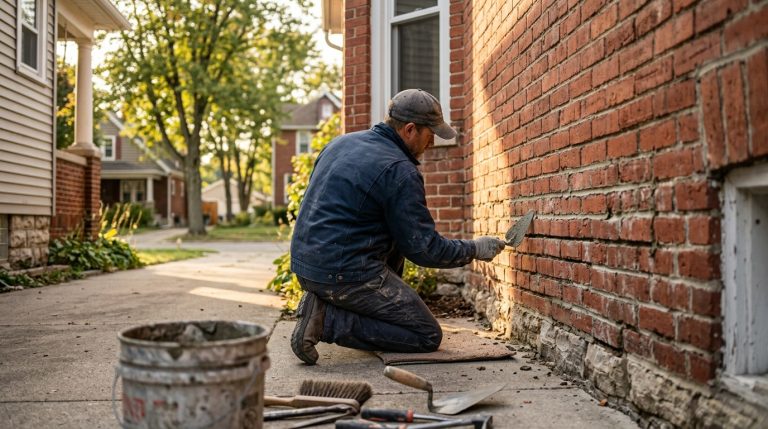
Cracked crowns, deteriorated mortar joints, and damaged flue liners are among the most frequent issues homeowners face with aging chimneys.
Annual inspections following CSIA guidelines help catch small problems before they require costly structural work.
Freeze-thaw cycles common in Parma, OH make masonry chimneys especially prone to moisture-related damage each winter.
A chimney showing cracked mortar, a damaged crown, or water stains on interior walls typically needs professional repair rather than a quick patch job, since these signs often point to deeper structural or moisture issues. Addressing them early with proper chimney repair prevents minor cracks from turning into costly rebuilds or safety hazards.
Most masonry chimneys develop problems gradually, often without an obvious warning until water intrusion or crumbling brick becomes visible. Understanding what causes these issues, and which repairs actually solve them, helps homeowners make informed decisions before calling a contractor. Chimney Repair performed correctly addresses the root cause rather than masking symptoms temporarily.
Why Masonry Chimneys Deteriorate Over Time
Chimneys are exposed to more weather stress than almost any other part of a house, sitting above the roofline and facing constant temperature swings. In Parma, OH, repeated freeze-thaw cycles through the winter months cause water trapped in brick and mortar to expand and contract, gradually breaking down the material.
Several factors accelerate this wear:
Moisture penetration through cracked crowns or missing caps
Expired or poorly installed flashing where the chimney meets the roofline
Age-related mortar breakdown, often called spalling, where brick faces flake or pop off
Chimney fires or creosote buildup that damage interior flue liners
Routine inspections following the three-tier system set by the Chimney Safety Institute of America help homeowners understand how much work a chimney actually needs. A Level I inspection covers readily accessible areas and is recommended annually, while Level II and III inspections apply after chimney fires, severe weather, or property transfers.
Common Chimney Problems and Their Fixes
Identifying the specific issue determines whether a simple repair or a full rebuild is appropriate. The table below outlines frequent problems alongside their typical corrective approach.
Problem
Likely Cause
Typical Fix
Cracked or spalling brick
Water absorption and freeze-thaw cycles
Brick replacement and repointing
Deteriorated mortar joints
Age, moisture, poor original mix
Tuckpointing or repointing
Damaged chimney crown
Sun exposure, cracking over time
Crown resurfacing or replacement
Leaning or structurally unsound stack
Foundation settling, prolonged water damage
Partial or full chimney rebuild
Smaller issues like hairline mortar cracks are generally addressed through repointing, where damaged mortar is removed and replaced without disturbing surrounding brick. More extensive damage, such as a leaning stack or widespread spalling, usually calls for a partial or full rebuild to restore structural integrity.
Preventing Future Chimney Damage
Regular maintenance extends the life of a masonry chimney and reduces the likelihood of emergency repairs. A few practical habits make a measurable difference over time.
Schedule a Level I inspection annually, even if the fireplace sees light use.
Keep a properly fitted chimney cap in place to block rain, snow, and animal entry.
Address small mortar cracks promptly before water works its way deeper into the structure.
Check flashing after major storms, since lifted or corroded flashing is a common source of hidden leaks.
Based in USA, Brick By Brick Masonry Restoration serves customers across Parma, OH, providing masonry evaluation and repair work for residential chimney systems.
Frequently Asked Questions
How often should a chimney be inspected? Industry guidance recommends an annual Level I inspection for chimneys in regular use, with more detailed Level II inspections required after chimney fires, severe weather, or before a property sale.
Can a cracked chimney crown be repaired without a full rebuild? In many cases, yes. Crown repair or resurfacing addresses surface cracking before it leads to deeper water infiltration, though severely deteriorated crowns may need full replacement.
What are signs a chimney needs repair rather than routine cleaning? Visible cracks in the crown or brick, rust on a damper or firebox, water stains on ceilings near the chimney, and crumbling mortar all indicate repair work is needed beyond standard sweeping.
Is chimney repair a seasonal job? Masonry repair work is generally best scheduled outside freezing temperatures, since mortar cures properly only within certain temperature ranges, making spring through fall the most practical window in most climates.
Business Info
Brick by Brick is a masonry contractor working on chimney, fireplace, and related brick and stone structures for residential and commercial properties, with service details available through its Google Business Profile.
In short: A skilled masonry contractor can protect your home’s foundation by repairing the brick, mortar, and concrete systems that keep water and ground pressure from reaching the structural core of your house. For...
Summary first: • A professional installation typically includes a property assessment, material selection, permit review, and post-setting before panels or pickets go up. • Vancouver, WA fences over 6 feet generally require a city...
Essentially: • Auto dealership design in Kennewick must balance OEM brand image requirements with local climate, zoning, and site conditions. • Service bay capacity, showroom visibility, and customer flow are the priorities driving most...