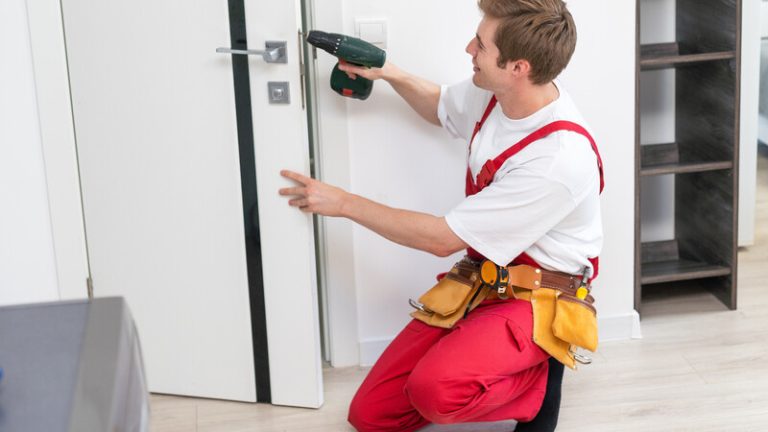
Most garage door failures in Sayreville come down to a handful of recurring mechanical issues that worsen without prompt attention.
A qualified technician can diagnose and resolve the majority of these problems in a single visit, often without a full replacement.
Most garage door problems share a short list of root causes: worn springs, frayed cables, misaligned tracks, and failing openers. Catching these issues early protects both your home’s security and your household’s safety.
Homeowners searching for Garage Door Repair service will find that the most common complaints fall into predictable categories. Understanding what each symptom points to helps you communicate clearly with a technician and avoid unnecessary repairs.
The Most Frequent Mechanical Failures
Approximately 30% of garage door repairs involve broken springs, making them the most common failure point. Springs bear the full weight of the door every time it moves, so fatigue is inevitable over years of daily use.
There are two types of springs on a garage door: extension springs and torsion springs, with torsion springs typically being the larger of the two and the more complicated to replace. Both types require professional handling. Replacing broken springs can be a dangerous task without the proper tools and knowledge.
Cables work alongside springs to guide the door smoothly along its tracks. Frayed or broken cables should be replaced as soon as possible to avoid further damage to the door or injury.
Opener Malfunctions and Sensor Issues
A garage door opener that responds slowly, clicks without moving, or reverses unexpectedly is one of the most disruptive problems a homeowner can face. Garage door openers have a typical lifespan of 10 to 15 years, with 12 years as the average. If your opener is approaching that range, intermittent failures are a strong signal that replacement is worth considering.
Sensor alignment is a separate but related issue. Garage doors can cause injury or damage, which is why safety sensors have long been required, and the U.S. Consumer Product Safety Commission updated its safety standards to ensure systems are equally effective. According to the Consumer Product Safety Commission’s safety standard for automatic residential garage door operators, these requirements remain actively enforced and subject to ongoing regulatory review. Sensors that are dirty, shifted, or wired incorrectly will prevent the door from closing and should be inspected before assuming the motor is at fault.
Problem
Common Cause
Typical Fix
Door won’t open or close
Broken spring or dead opener
Spring replacement or opener repair
Door reverses before closing
Misaligned safety sensors
Sensor realignment or replacement
Loud grinding or squealing
Worn rollers or dry tracks
Lubrication or roller replacement
Door off track
Damaged rollers or bent track
Track realignment or replacement
Off-Track Doors and Noisy Operation
A garage door that stalls or jams as it moves, or is stuck in a closed or open position, could signal a mechanical issue or a roller problem. One common reason is worn-out rollers, which cause misalignment over time — these rollers are essential for smooth operation, and when they break or wear out, the door may start to fall off track.
A door that is off track can be extremely dangerous and should be fixed as soon as possible. Attempting to force the door open or closed in this condition risks bending the track further, which turns a simple repair into a costlier one.
Unusual noise is another symptom homeowners frequently dismiss. A noisy door is a sign of a potential problem, and noisy operation could indicate issues with the spring line system or a door that simply requires lubrication for proper operation. Squealing, grinding, or rattling sounds during operation are worth investigating before they escalate.
When to Call a Professional
Garage doors are one of the heaviest moving objects in a home, which can be incredibly dangerous in the event of a malfunction. DIY attempts on springs, cables, or tracks carry real injury risk and can void manufacturer warranties on newer systems.
Armor Overhead Door services garage doors, garage door openers, and related components, covering sales, repairs, and installation. Armor Overhead Door specializes in advanced garage door systems, including garage openers and commercial overhead doors.
A few signs that warrant an immediate service call rather than a wait-and-see approach:
The door moves unevenly or one side appears lower than the other
You hear a loud bang from the garage (often a spring snapping)
The door falls faster than usual when closing manually
The opener motor runs but the door does not move
Frequently Asked Questions
How long do garage door springs typically last? Most torsion springs are rated for 10,000 cycles. For a household that uses the door four times a day, that translates to roughly seven years before replacement becomes likely.
Is it safe to use a garage door with a broken spring? No. Operating a door with a broken spring puts excessive strain on the opener motor and creates a risk of the door dropping suddenly. The door should stay closed until a technician replaces the spring.
What causes a garage door to go off track? Off-track rollers can cause rough operation for the garage door, which may warrant roller repair or track repair. Physical impact, such as a vehicle bumping the door, is another common cause.
How often should a garage door be serviced? Most technicians recommend a professional inspection once a year, combined with basic lubrication of rollers, hinges, and springs every six months.
For homeowners in Sayreville dealing with any of these issues, prompt diagnosis prevents minor wear from becoming a full replacement. Armor Overhead Door provides residential and commercial garage door repair and installation throughout the area. Scheduling a service call at the first sign of trouble is the most cost-effective step you can take.
In today’s fast-paced business environment, ensuring the security of commercial properties is more critical than ever. With increasing threats ranging from theft to vandalism, the need for robust security measures cannot be overstated. One...