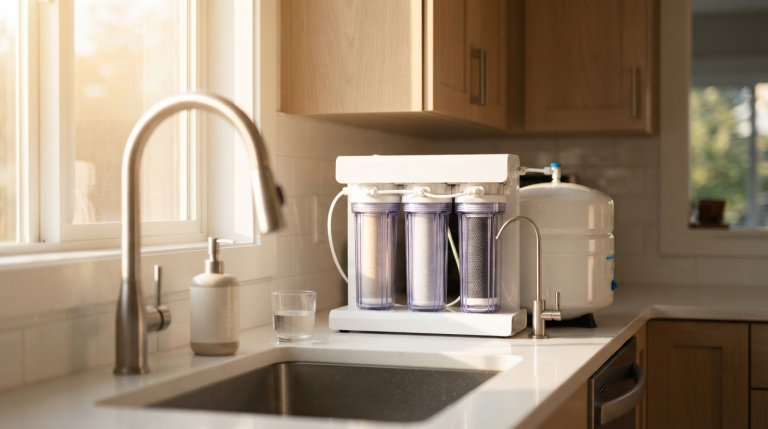
A water filtration system reduces sediment, chlorine taste, and certain contaminants in household water before it reaches taps and appliances.
Saskatoon, SK draws municipal water that can carry seasonal taste and hardness variations, making point-of-use or whole-home filtration a practical consideration.
Health Canada publishes national drinking water guidelines that help homeowners understand which contaminants filtration addresses.
A water filtration system works by passing tap water through physical and sometimes chemical media that trap sediment, chlorine byproducts, and other unwanted particles before water reaches a faucet or appliance. The result is water that generally tastes cleaner and carries fewer visible impurities than unfiltered tap water.
Homeowners researching a Water Filtration System often start because of a specific complaint: cloudy water, a chlorine smell, or mineral residue on dishes and fixtures. These symptoms usually point to sediment, chlorine disinfection byproducts, or dissolved minerals common in municipal supplies, including those serving Saskatoon, SK.
What a Filtration System Actually Removes
Filtration media are selected based on the contaminants present in a given water supply. Common targets include:
Sediment and rust particles from aging distribution pipes
Chlorine taste and odor from municipal disinfection
Organic compounds that affect clarity or smell
Certain trace metals, depending on the filter media used
National guidance from Health Canada’s drinking water quality guidelines outlines which substances are tracked because they could affect health or water usability, giving homeowners a reference point when comparing filtration options. Guidelines are established specifically for substances where exposure could lead to adverse health effects, the substance is frequently detected in drinking water supplies throughout Canada, and it is detected at a level of possible human health significance.
Filtration Versus Other Water Treatment Options
Not every water quality concern calls for the same equipment. The table below outlines how filtration compares to two other common residential treatments.
Treatment Type
Primary Purpose
Best For
Water filtration system
Removes sediment, chlorine taste, and select contaminants
Taste, odor, and clarity concerns
Water softener
Reduces calcium and magnesium (hardness minerals)
Scale buildup on fixtures and appliances
Reverse osmosis system
Removes dissolved solids and a broad range of contaminants
Drinking and cooking water at specific taps
A household dealing with hard water stains may need a softener rather than a filter, while one focused on drinking water taste may prioritize filtration or reverse osmosis at the kitchen tap.
Signs a Home May Benefit From Filtration
Several practical indicators suggest filtration is worth evaluating:
Water has a noticeable chlorine smell straight from the tap.
Dishes, glasses, or fixtures show cloudy residue after washing.
Ice cubes or boiled water carry an off taste.
A household relies on bottled water for drinking due to taste concerns.
Point-of-entry filtration treats water as it enters the home, while point-of-use systems target a single tap, usually in the kitchen. These filtration systems may be installed at the tap, known as point of use, or at the location where water enters the home, known as point of entry. The choice depends on whether the concern applies to all household water or just drinking and cooking water.
Seasonal Water Quality Considerations in Saskatoon, SK
Surface water sources can show seasonal shifts in turbidity and organic content, particularly during spring runoff or periods of heavy rainfall. Homeowners in Saskatoon, SK sometimes notice temporary taste or clarity changes tied to these seasonal patterns, which filtration can help manage at the household level. Regular filter maintenance, including scheduled cartridge changes, keeps a system performing as intended rather than allowing trapped sediment to accumulate.
Frequently Asked Questions
Does a water filtration system remove all contaminants from tap water? No single filter removes every possible contaminant. Different media target different substances, which is why some households combine filtration with reverse osmosis or softening based on their specific water quality concerns.
How often does a filtration system need maintenance? Filter cartridges typically require replacement on a schedule set by the manufacturer, often every few months, depending on household water usage and the contaminant load in the source water.
Is filtered water necessary if municipal water already meets safety standards? Municipal water meeting regulatory standards is considered safe to drink, but filtration can still improve taste, odor, and clarity, which are common reasons homeowners choose additional treatment.
Can a filtration system help with hard water stains? Filtration primarily targets taste, odor, and sediment rather than hardness minerals. A water softener is generally the more direct solution for scale and mineral buildup.
A water filtration system addresses taste, odor, and sediment concerns that municipal treatment alone may not fully resolve at the household level, particularly where seasonal water quality shifts affect daily use. Based in Canada, Perfection Plumbing & Drain Cleaning Ltd. serves customers across Saskatoon, SK with water treatment installation and service work.
Published Service Information
Information on local filtration, softening, and reverse osmosis installation is available for review alongside other water treatment offerings for the area.
Bottom line: Homeowners asking about water purification often want a quick answer to one question: which system actually fixes the taste, odor, or hardness problem in their tap water. In most cases, the right...
Bottom line: A dripping faucet, a slow drain, or a water heater that stops producing hot water are among the most common reasons homeowners search for plumbing help. Identifying the specific problem first prevents...
Key point: • Repeat sewer problems after a repair usually trace back to root intrusion, grease buildup, or skipping follow-up camera checks. • Scheduling a camera inspection every two to three years catches new...