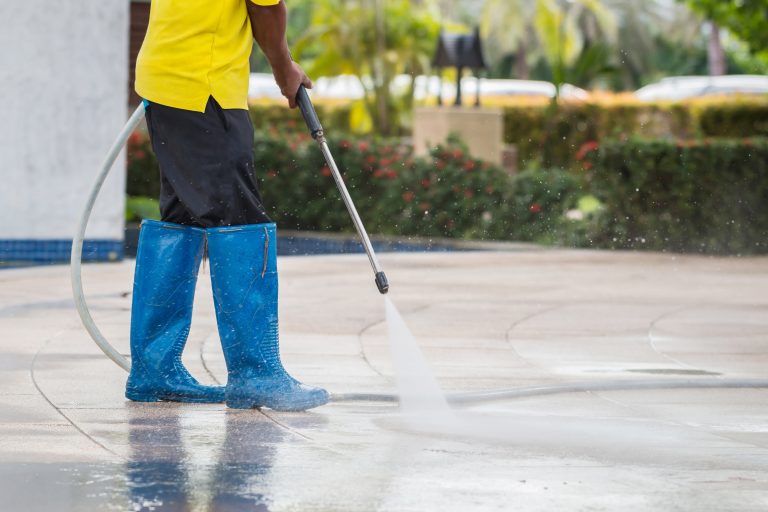
Hard-water marks can leave outdoor surfaces looking cloudy, streaked, or uneven. In Peoria, AZ, these deposits commonly develop where irrigation spray, hose water, pool splash, or drainage repeatedly reaches concrete, masonry, and other exterior materials.
Pressure washing can help clean affected areas, but water pressure alone may not remove every mineral deposit. The outcome depends on the surface, the age of the buildup, and whether the discoloration has penetrated or altered the material. Understanding these factors helps homeowners approach the problem without treating every white mark as ordinary dirt.
What Causes Hard-Water Marks Outdoors?
Hard water contains dissolved minerals. When water lands on an outdoor surface and evaporates, some of those minerals remain behind. Repeated wetting and drying can gradually produce visible white or gray deposits.
Irrigation systems are a frequent source. A misdirected sprinkler may spray a wall, walkway, or section of a driveway several times each week. Pool water can also leave deposits around coping, deck edges, and nearby paths. Hose bibs, outdoor faucets, and areas beneath planters may create localized staining.
Fresh deposits may appear as light spots or thin streaks. Older accumulation can form a crusted layer that bonds more firmly to the surface. If the underlying source continues, cleaned areas may develop new marks soon afterward.
Why Does the Surface Material Matter?
Exterior materials respond differently to water pressure and cleaning solutions. Dense concrete may tolerate a different cleaning method than painted masonry, natural stone, or decorative coatings.
Concrete can develop mineral residue within its pores. Pavers may show deposits across their faces or along joints. Natural stone requires careful evaluation because some varieties react poorly to acidic products commonly associated with mineral removal. Painted surfaces may experience fading, peeling, or loss of adhesion if excessive pressure is used.
Before beginning residential power washing, the surface should be checked for cracks, loose coatings, failing joints, previous repairs, and signs of erosion. This assessment helps determine whether pressure can be used safely and whether another cleaning step may be necessary.
Can Water Pressure Remove Mineral Deposits by Itself?
Pressure washing is effective for removing surface dirt, dust, organic residue, and material that has already loosened. However, hard-water marks are mineral deposits rather than ordinary grime. Older deposits may remain even after surrounding dirt has been washed away.
In these situations, a suitable cleaning agent may be used to loosen the mineral bond before controlled rinsing. The product must be compatible with the surface being treated. Stronger is not automatically better, especially around decorative concrete, stone, metal fixtures, landscaping, or painted finishes.
A small test area can reveal how the surface responds. It may also show whether the discoloration is removable buildup or a permanent change in the material. This distinction matters because additional power washing will not correct etching or surface damage.
Why Is Even Cleaning Important?
Treating only the most visible white marks can produce an uneven appearance. The cleaned spot may become brighter than the surrounding surface, revealing dirt and weathering that were less noticeable before.
For this reason, the treatment area may need to extend beyond the individual stain. Cleaning along a complete walkway section, wall panel, or defined portion of concrete can create a more consistent result. Natural stopping points, such as expansion joints or edges, help reduce visible differences.
Consistent equipment movement also matters. Holding a spray too close or remaining in one place can create lines, patches, or surface wear. Residential pressure washing should rely on controlled pressure, an appropriate spray pattern, and a method suited to the material.
How Can Nearby Features Be Protected?
Hard-water marks often appear near irrigation heads, pool equipment, planters, doors, windows, and metal fixtures. These nearby elements should be considered before cleaning begins.
Runoff must be directed away from areas where residue could collect. Plants may need protection from cleaning products, while doors and windows should be checked for gaps that could allow water intrusion. Metal fixtures require attention because certain products can affect their finish.
Poolside areas present additional concerns. Cleaning residue should not be allowed to flow into the pool, and slick surfaces need sufficient time to dry before regular use resumes. Careful preparation supports a cleaner and more controlled process.
How Can Hard-Water Marks Be Prevented From Returning?
Cleaning addresses the visible deposits, but it does not correct the water source. Homeowners should inspect sprinklers, drip lines, hose connections, drainage patterns, and pool splash zones after the surface has been treated.
Redirecting a sprinkler head may keep repeated spray away from walls and pavement. Repairing a leaking faucet can prevent a concentrated stain from forming beneath it. Removing standing water and improving drainage may also reduce recurring residue.
Occasional rinsing can help prevent fresh deposits from building into thicker layers. Addressing them early is generally more manageable than allowing repeated mineral accumulation to remain through multiple hot and dry seasons in Peoria.
Plan the Right Approach for the Surface
Hard-water marks require more than simply increasing water pressure. The material, deposit thickness, surrounding features, and source of the moisture all influence the appropriate cleaning method.
When the condition of a surface is uncertain, arranging a professional evaluation can help determine whether pressure washing is suitable and what preparation may be needed. A surface-specific approach can address mineral buildup while reducing the likelihood of uneven cleaning or avoidable damage.