Kitchen cabinet installation involves layout planning, precise leveling, and secure wall anchoring to avoid long-term structural issues.
Older housing stock in Hudson County, NJ often requires extra prep work for uneven walls and outdated framing.
Comparing bids, timelines, and warranty terms helps homeowners avoid common installation mistakes.
Hiring a qualified kitchen cabinet installation service means finding a contractor who can measure, level, and secure cabinetry correctly the first time, since even small gaps or misaligned frames can cause doors to stick or shelves to sag within a year. The right installer also accounts for local housing conditions, including older wall framing common in many Hudson County, NJ homes.
A kitchen cabinet installation service typically covers layout verification, wall stud location, cabinet leveling, and final hardware attachment. These steps matter because cabinets that are even slightly out of level can place uneven stress on hinges and countertops over time. Homeowners researching installation options should ask prospective contractors how they handle wall irregularities before work begins, since this is where many budget installations fall short.
What a Professional Installation Actually Involves
Cabinet installation is not simply screwing boxes to a wall. It requires sequencing, measurement accuracy, and attention to how upper and lower cabinets interact with countertops, appliances, and plumbing lines.
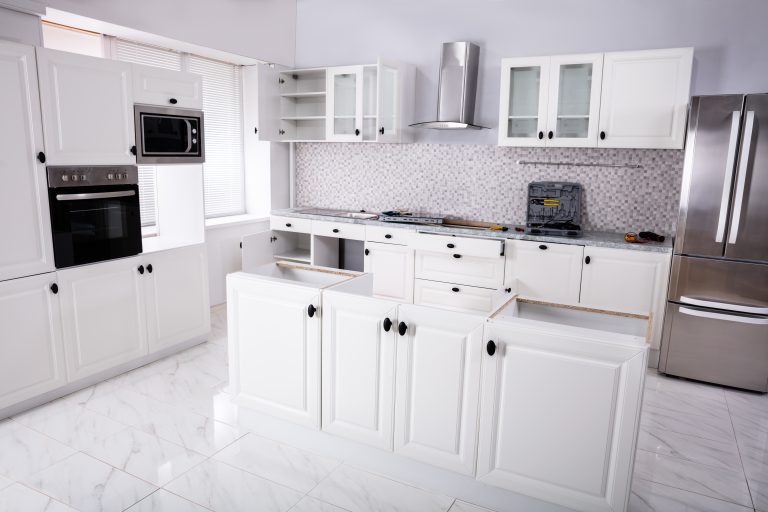
A typical installation sequence includes:
Marking stud locations and establishing a level reference line
Installing upper cabinets first to avoid obstruction from base units
Shimming cabinets to correct for floor and wall variance
Securing cabinet runs together before anchoring to studs
Fitting doors, drawers, and hardware as a final step
Skipping or rushing any of these stages is a common source of callbacks. According to the U.S. Department of Housing and Urban Development, structural fixtures in older homes often require additional assessment before new installations, particularly where wall framing has shifted over decades of settling.
Why Local Housing Stock Matters in Hudson County, NJ
Many homes across Hudson County, NJ were built before modern framing standards were standardized, which means walls are not always perfectly plumb. Installers working in this region frequently encounter:
Plaster-and-lath walls that behave differently than drywall when anchoring cabinets
Uneven floors in older multi-family buildings
Tight kitchen footprints typical of pre-war construction
Load-bearing considerations in renovated or converted units
These conditions do not make installation impossible, but they do require an installer who inspects the space carefully rather than applying a one-size-fits-all approach.
Comparing Installation Approaches
Approach
Typical Timeline
Best Suited For
DIY installation
3-7 days
Simple, single-run kitchens with standard walls
General handyman service
1-3 days
Minor cabinet swaps or small kitchens
Dedicated cabinet installation service
1-2 days
Full kitchen remodels, custom layouts, older homes
Dedicated installation services generally complete work faster because the process is routine rather than a one-time project, and they are better equipped to handle irregular wall conditions common in older housing.
Questions to Ask Before Hiring
How is wall and floor variance handled? Ask whether the installer measures for level and plumb before cutting or drilling, since this step prevents misaligned doors and drawers later.
What warranty applies to labor versus materials? Cabinet hardware and labor warranties are often separate, so homeowners should confirm both in writing before work begins.
Is a permit required for the project? Most cabinet-only installations do not require a permit unless electrical or plumbing relocation is involved, so confirming this early avoids delays.
How long does a typical kitchen take to complete? Timelines vary by kitchen size and wall condition, but most installations for a standard kitchen are completed within one to two working days once cabinets arrive on site.
Business Info
Based in Jersey City, New Jersey, Elegant Kitchen & Bath serves customers across Hudson County, NJ for kitchen cabinet installation work.
Frequently Asked Questions
Does cabinet installation include countertop fitting? Countertop installation is typically a separate step that follows cabinet placement, since countertops are measured and cut to match the finished cabinet layout.
Can existing cabinets be reused during a kitchen update? In some cases, cabinet boxes can be reused if they are structurally sound, though doors, drawers, and hardware are often replaced for a consistent finish.
What is the biggest risk with budget cabinet installation? Improper leveling and inadequate wall anchoring are the most common issues, often leading to sagging shelves or doors that no longer close evenly.
Final Considerations
Cabinet installation quality depends on preparation, measurement accuracy, and an installer’s familiarity with the specific wall and floor conditions found in a given home. In regions with older housing stock, such as much of Hudson County, NJ, these details carry more weight than in newer construction.
Published details for Elegant Kitchen & Bath include current service area information for the region.
A well-designed kitchen can truly become the heart of your home, blending style and function for an enjoyable cooking experience. For homeowners seeking a significant upgrade, finding a quality home kitchen cabinet in Maplewood,...
In the charming town of Little Falls, NJ, homeowners are increasingly drawn to modern sink vanities’ sleek and sophisticated appeal. These essential bathroom fixtures are functional and serve as a stylish focal point, enhancing...
Finding the ideal cabinetry for your house is critical for balancing elegance and utility, and Lenoir City, Tennessee, has a large range of new cabinets for sale in Lenoir City, TN. With a growing...