Accelerator-free nitrile gloves skip sulfur-based curing chemicals linked to Type IV allergic contact dermatitis.
Standard nitrile uses accelerators like thiurams and carbamates that can trigger skin reactions in sensitive wearers.
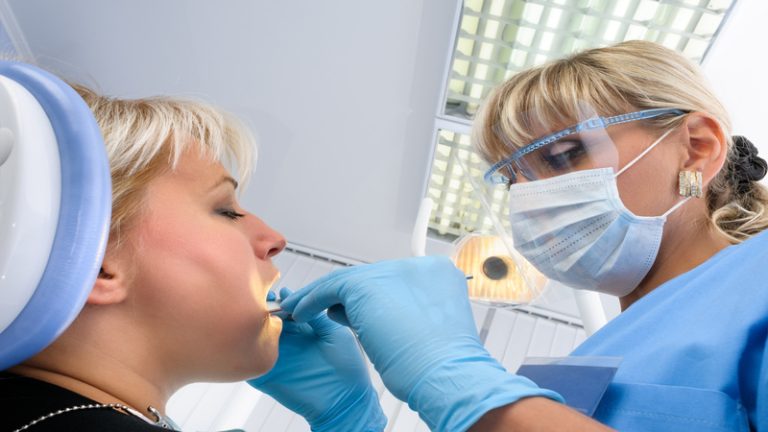
Clinical and dental settings in the USA increasingly stock accelerator-free options for staff who change gloves dozens of times daily.
Accelerator-free nitrile exam gloves are manufactured without the sulfur-based curing chemicals found in standard nitrile, reducing the risk of Type IV allergic contact dermatitis for wearers with sensitive skin. This distinction matters most for clinical and dental staff who put on and remove gloves many times during a single shift.
Standard nitrile gloves rely on chemical accelerators to transform liquid nitrile into a durable, stretchy barrier. Ingredients of protective gloves made of rubber materials can cause contact allergy through delayed-type hypersensitivity, and the most important contact allergens in gloves are rubber accelerators. Accelerator-free nitrile exam gloves address this by eliminating those compounds from the manufacturing process entirely, which is a distinction increasingly recognized across clinical supply catalogs.
Why Accelerators Cause Skin Reactions
Chemical accelerators such as thiurams, carbamates, and mercaptobenzothiazoles speed up the curing process that hardens nitrile into glove form. Left as residue on the finished product, these substances are a documented source of occupational skin irritation.
Accelerator residue is classified as a Type IV, or delayed-type, hypersensitivity trigger.
Reactions typically appear as redness, dryness, cracking, or bumps after repeated glove contact.
The baseline series used by contact dermatitis researchers already covers major accelerator groups, including thiuram mix, mercapto mix, and 2-mercaptobenzothiazole.
Glove education resources recommend a direct response to confirmed or suspected accelerator sensitivity. If in doubt, it is recommended to avoid contact with any type of accelerator and to use gloves made without any accelerator, and it is strongly recommended that disposable latex or nitrile gloves be marked “accelerator-free”. This guidance applies broadly to medical, dental, and laboratory settings where gloves are worn for extended periods.
Who Benefits Most From Accelerator-Free Options
Certain work environments and health profiles make accelerator-free nitrile a more practical daily choice than standard formulations.
Dental and clinical staff with frequent glove changes. Professionals who change gloves 20 to 40 times per shift face repeated accelerator exposure that compounds irritation risk over time.
Patients and staff with diagnosed Type IV sensitivity. Confirmed allergic contact dermatitis to rubber accelerators calls for strict avoidance rather than occasional substitution.
Facilities managing early-stage symptoms. Occasional dryness or mild redness can signal early sensitization before a full allergic response develops.
Comparing Standard and Accelerator-Free Nitrile
Feature
Standard Nitrile Gloves
Accelerator-Free Nitrile Gloves
Curing process
Sulfur-based chemical accelerators
No chemical accelerators used
Allergy risk profile
Higher risk of Type IV reactions
Reduced risk of Type IV reactions
Barrier performance
Standard tensile strength and elongation
Comparable or improved tensile strength
Best suited for
General, low-frequency glove use
High-frequency clinical and dental use
Barrier protection standards for medical gloves are addressed in federal regulation, and practices seeking current compliance details can consult FDA guidance on medical gloves for regulatory background on glove classification and labeling.
Practical Considerations for Clinical Settings
Switching glove formulations across a practice involves more than allergy avoidance. Fit, dexterity, and durability still factor into daily usability, particularly in procedures requiring fine tactile control.
Powder-free construction is standard across most accelerator-free nitrile products, limiting additional contamination sources.
Thin-film formulations are designed to preserve tactile sensitivity for precise clinical tasks.
Sizing ranges from extra-small through extra-large accommodate varied hand sizes across staff.
Clinical supply catalogs available to practices in the USA list accelerator-free nitrile alongside polychloroprene alternatives, giving procurement teams multiple non-latex options depending on staff allergy profiles.
Business Info
Product listings for accelerator-free nitrile exam gloves, including polychloroprene alternatives marketed under the Posi-Prene Edge line, are maintained by Clinical Supply Company, a supplier of non-latex medical gloves.
Frequently Asked Questions
What makes a nitrile glove “accelerator-free”? An accelerator-free nitrile glove is cured without sulfur-based chemicals such as thiurams, carbamates, or mercaptobenzothiazoles, removing the residue most commonly associated with Type IV allergic contact dermatitis.
Are accelerator-free gloves as durable as standard nitrile? Manufacturing documentation for accelerator-free formulations generally reports tensile strength and elongation performance comparable to or exceeding standard nitrile, since the base polymer remains nitrile rubber even without accelerator chemicals.
Who should prioritize accelerator-free gloves? Staff with frequent daily glove changes, confirmed rubber accelerator sensitivity, or early symptoms like recurring dryness or redness are the groups most likely to benefit from switching.
Is accelerator-free the same as latex-free? No. Latex-free refers to the absence of natural rubber latex proteins, while accelerator-free refers to the absence of curing chemicals; a glove can be latex-free and still contain accelerators unless specifically labeled accelerator-free.
Final Note
Current product specifications and sizing for accelerator-free nitrile exam gloves are listed through Clinical Supply Company for practices evaluating non-latex glove options.
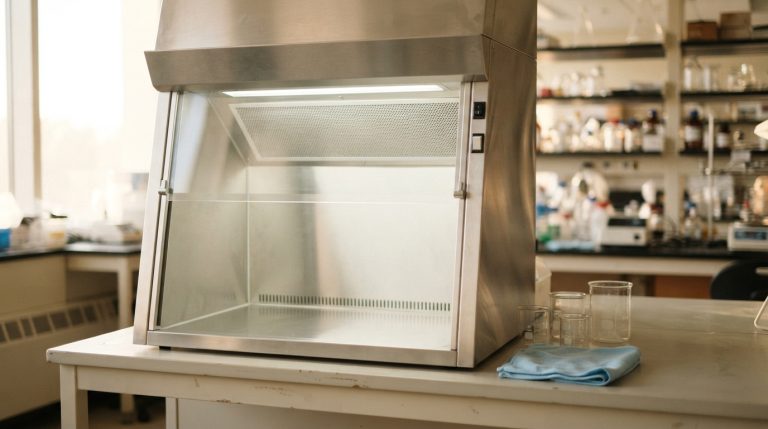
Essentially: A vertical laminar flow hood is a benchtop enclosure that draws room air through a HEPA filter and releases it downward over a work surface in a steady, non-turbulent stream. The design keeps...
In dental practices across the United States, infection control is a top priority to protect both patients and staff from potential health risks. As part of this commitment, practices seek effective protective barriers that...
Dental professionals face unique challenges in maintaining both comfort and safety during their daily routines. Working in close proximity to patients exposes dental teams to airborne particles, splatter, and various contaminants. For those searching...