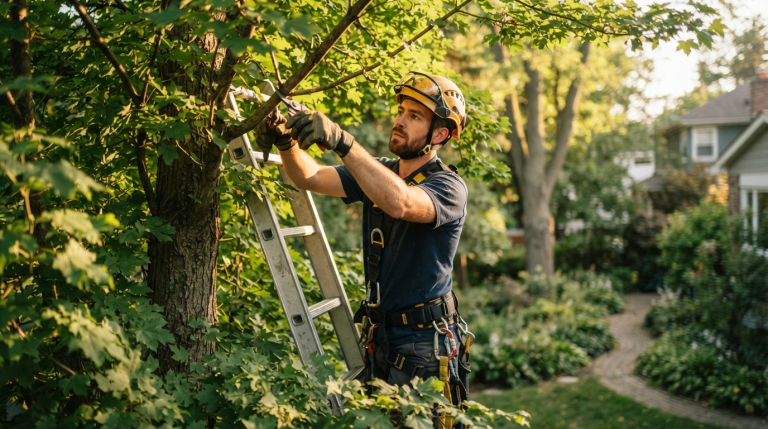
Professional tree removal typically includes an on-site inspection, a written estimate, and a controlled takedown using proper rigging or crane equipment.
Licensed, insured crews follow a sequence: assessment, permitting check (if required), removal, and debris cleanup.
Costs and timelines vary by tree size, location, and site access, so an in-person evaluation is the only reliable way to get an accurate quote.
A professional tree removal arrives at a property, evaluates the tree’s condition and surroundings, provides a written estimate, then removes the tree in sections using ropes, cranes, or other rigging to protect nearby structures. Understanding each stage of this process helps property owners set realistic expectations before work begins.
Homeowners searching for Tree Removal Services in Toledo, OH are usually dealing with a tree that has become hazardous, diseased, or inconveniently located near a structure, driveway, or power line. The process generally starts with a site visit where a crew examines trunk condition, root stability, and surrounding obstacles before quoting a price. This step matters because tree size, lean direction, and proximity to buildings all affect labor, equipment needs, and final cost.
How the Removal Process Typically Unfolds
A standard removal job follows a predictable sequence, though specifics shift depending on tree size and site conditions.
Initial inspection – A technician reviews the tree’s health, lean, and nearby hazards such as fences, utility lines, or structures.
Written estimate – Pricing reflects tree height, diameter, accessibility, and whether crane assistance is needed.
Site preparation – Crews clear the work area and may lay protective mats to reduce lawn or driveway damage.
Controlled takedown – Large trees are often removed in sections rather than felled whole, especially in tight residential lots.
Cleanup and hauling – Branches, logs, and debris are removed, though stump grinding is usually a separate service.
Why a Professional Inspection Comes First
A tree risk assessment is a structured evaluation that weighs the likelihood of a tree failing against the potential consequences, producing a risk rating that ranges from low to extreme. According to the International Society of Arboriculture’s risk assessment standards, the resulting rating determines whether a tree should be monitored, pruned, braced, or removed, rather than defaulting to removal in every case. This structured approach is why reputable crews inspect before quoting, since not every damaged or leaning tree needs to come down.
What Affects Cost and Timing
Factor
Why It Matters
Tree height and diameter
Larger trees require more cutting time, rigging, and sometimes crane support
Site access
Tight yards, fences, or nearby structures slow the process and may raise labor costs
Tree condition
Diseased, hollow, or storm-damaged trees can require extra caution and specialized rigging
Debris removal
Hauling logs and chipping branches is often priced separately from the removal itself
Tight urban lots in Toledo, OH often complicate access for larger equipment, which is one reason an in-person estimate is more reliable than a phone quote. Seasonal storm damage, common in the region, can also create demand spikes that affect scheduling during peak months.
Questions to Ask Before Hiring a Crew
A short list of questions can help property owners compare providers and avoid surprises.
Is the crew licensed, bonded, and insured for liability and workers’ compensation.
Will the estimate include stump grinding, debris hauling, and site cleanup, or are those billed separately.
Does the company carry certified arborists on staff who can evaluate tree health before recommending removal.
What equipment will be used on-site, including whether a crane is necessary for the job.
Based in USA, the company All Seasons Tree Care serves customers across Toledo, OH, performing tree removal, trimming, stump grinding, and crane services for residential and commercial properties.
Frequently Asked Questions
Does every damaged tree need to be removed? Not necessarily. Arborists often recommend pruning, cabling, or monitoring before removal, reserving takedown for trees where risk cannot be reduced through other measures.
How long does a typical tree removal take? Smaller trees in open areas may take a few hours, while large trees near structures or requiring crane work can take a full day or longer.
Is a permit required to remove a tree in Toledo, OH? Permit requirements vary by property type and tree location, so checking with local authorities or the removal crew before work begins is recommended.
Does tree removal include stump removal? Usually not automatically. Stump grinding is typically quoted and performed as a separate service after the tree itself has been taken down.
Final Notes
Hiring a professional crew for tree removal involves more than cutting down a tree; it includes inspection, planning, controlled execution, and cleanup, each of which affects final cost and timeline. Current service details for All Seasons Tree Care are available for property owners comparing local tree removal options.
Summary: A skunk problem usually announces itself through smell before sight. The odor can settle into siding, soil, and even concrete, and it often lingers long after the animal has moved on, which makes...
Quick summary: A well-maintained tree canopy lowers the chance of falling limbs, pest infestations, and fire fuel buildup, which is why routine upkeep matters more than reactive repairs after storm damage occurs. Scheduling Tree...
Key takeaway: Most homeowners in Ashburn should book a cleaning service every one to two weeks for routine upkeep, with deeper seasonal cleanings scheduled around spring, fall, or major household changes. The right frequency...