
If you are suffering from cataracts and vision correction methods are no longer helping you, your doctor may recommend eye cataract surgery to treat your condition.
Cataract surgery is a safe and effective procedure that can significantly improve not only your vision but also your quality of life. The operation involves replacing your eye’s cloudy natural lens with a clear artificial lens.
Here, we will discuss what to expect during the operation and some of the recommendations your doctor may make for the best cataract surgery results.

Before cataract eye surgery
Your ophthalmologist will set the focusing power for your new lens by examining your eye. They will also take a full medical history and ask you about any medications you may take.
Depending upon the type, you might have to stop taking certain medications in the lead up to your surgery. The ophthalmologist may also give you eye drops to prevent infection and swelling. These eye drops typically need to be administered one or two days before surgery.
Your ophthalmologist may also advise you to fast, so be prepared to not eat anything for six to twelve hours before surgery. Cataract surgery is an outpatient procedure, so you shouldn’t need to pack a bag to stay overnight.
You won’t be able to drive yourself home, so you should arrange for a friend or family member to take you back after your operation. You might also want to think about having some extra help around the house for the first week or so after surgery. Your surgeon may tell you to avoid certain activities like lifting and bending.
The day of your cataract eye surgery
The entire cataract removal procedure takes less than an hour and can take as little as 15 minutes. First, the surgeon will dilate your pupil with eye drops. Then they will administer a local anesthetic and if required, a sedative. You will remain awake during the surgery.
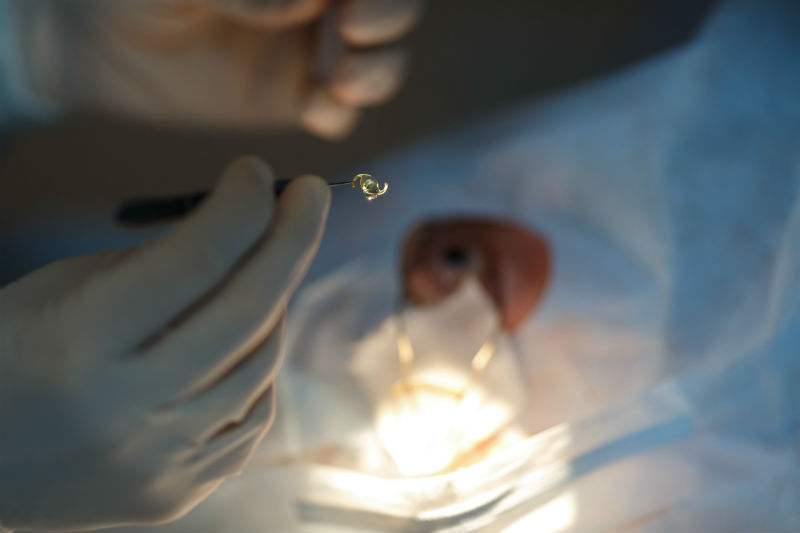
The surgeon makes a small incision in your eye and begins to break apart the clouded lens. Once the existing lens is sufficiently broken up, the surgeon will use a small suction device to remove the tiny fragments. They will then implant the artificial lens into your eye.
After cataract eye surgery
You will be able to go home after spending about an hour in recovery so that the surgeon can be sure you aren’t experiencing any post-operative complications.
Your doctor will likely recommend wearing an eye patch for a few days and a protective shield when you sleep to protect the eye. Most discomfort should go away in a few days, and you can manage it with over-the-counter pain medicine.
You should fully heal within eight weeks, and your vision should begin to improve in three to five days following the surgery. Your surgeon may give you some eye drops to use at home after your surgery. These help to reduce the risk of infection and promote healing.
During the weeks after your cataract removal, avoid strenuous activities, rubbing your eyes, and anything that may cause a foreign body like dust or debris to enter the eye. Follow any post-operative care advice provided by your ophthalmologist.
Final words
Cataract eye surgery can be life-changing. Better yet, many patients who undergo the procedure report that their vision improves beyond how well they could see before their cataracts developed. If you are living with cataracts and would like to discuss cataract eye surgery, find a reputable ophthalmologist near you.