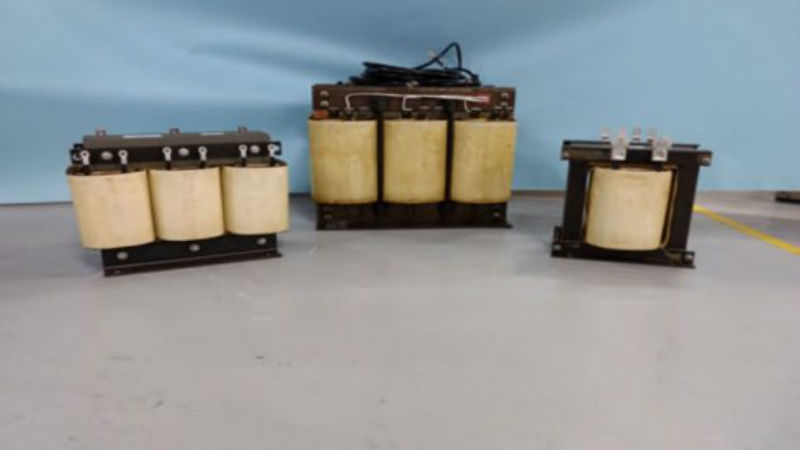
Most appliances, small motors and typical types of applications utilize single phase transformers to move and change electrical energy from one voltage level to another, but it does not change the frequency of the power between the circuits. In this way, the transformer acts as a static device that separates the two circuits physically but allows the energy to pass through.
The Structure
All single phase transformers are used with a single-phase alternating current, which means they can be used with power from a main. They can be added to a system to step down the power to avoid damage to the load side of the system.
The design includes a core, which can be made of different types of magnetic material, around which is wrapped a primary and a secondary winding. These wire windings do not make contact with each other, so there is no direct physical connection between the two circuits.
As the power comes in on the primary winding, it generates an alternating magnetic flux. This flux is transmitted, through electromagnetic induction, to the secondary winding. The number of windings and the design of the transformer allows for the step down or transformation required between the primary and secondary windings to produce the desired voltage on the output side of the transformer.
Options and Considerations
There are different options in single phase transformers. An autotransformer is used in most applications with low power. This is different from a standard single phase transformer as it uses only one winding, which prevents it from separating or isolating the two sides of the circuit. However, these are highly effective, compact transformers that are used in many applications.
Other types of single phase transformer options include the flyback transformer, which can store energy for limit times, as well as the constant-voltage transformer, designed to accommodate for spikes and drops in the input voltage from the main.